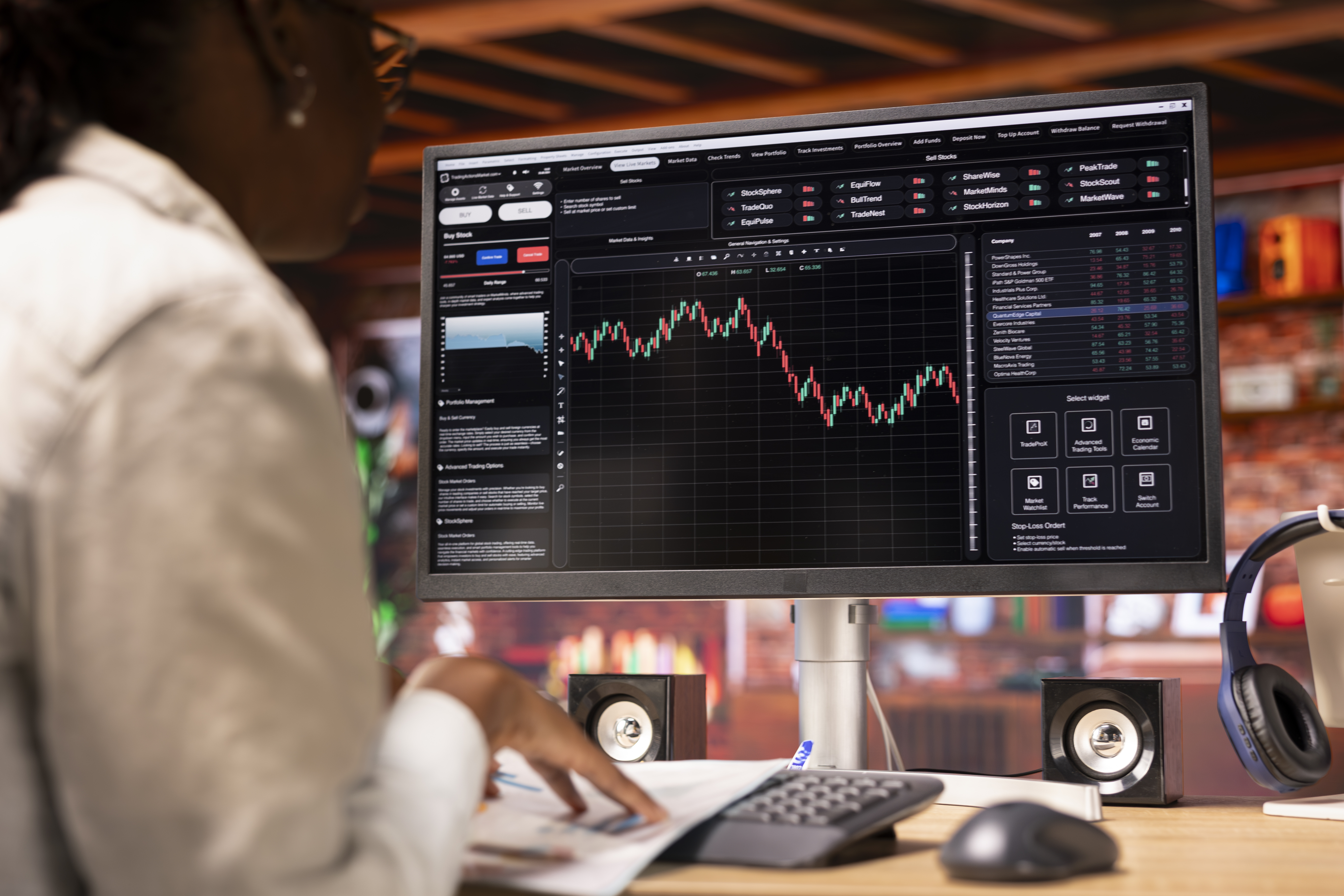
1.0 Forex Basics – Introduction

Forex, short for foreign exchange, is the global market where currencies are bought and sold. It is the largest and most liquid financial market in the world, with daily trading volume exceeding trillions of dollars. Unlike stock markets, the Forex market operates 24 hours a day, 5 days a week, allowing traders from around the world to participate at any time.

At XIVON FX Plus, we believe that education is the first step to successful trading. Even if you are not trading directly on our platform, understanding Forex basics is essential because it forms the foundation for everything else in trading—from analyzing charts to managing risk and making informed decisions. By learning the fundamental concepts first, you can trade more confidently and avoid common mistakes that new traders often make.

In this section, we will cover the key concepts every beginner should know, including:

  • What Forex trading is and how it works
  • Major currencies and currency pairs
  • How exchange rates are determined
  • The structure and participants of the Forex market

Whether you are a beginner or planning to trade with a small amount, a strong understanding of the basics will give you an edge and help you make smarter trading decisions. At XIVON FX Plus, we encourage all traders to learn as much as possible about Forex, because knowledge is one of the most valuable tools for success in the market.

Forex trading, also known as foreign exchange trading or FX trading, refers to the buying and selling of currencies in order to profit from changes in exchange rates. Every forex trade involves two currencies, because one currency is exchanged for another at an agreed price.

For example, when trading EUR/USD:

  • You are buying Euros (EUR)
  • And selling US Dollars (USD)

If the value of the Euro rises against the US Dollar, the trade may result in a profit. If it falls, the trade may result in a loss.

The forex market is the largest financial market in the world, with daily trading volumes far exceeding those of stock or futures markets. Unlike stock markets, forex does not operate through a central exchange. Instead, it functions through a global network of banks, financial institutions, brokers, and individual traders.

Forex trading is commonly used for:

  • Facilitating international trade and investments
  • Currency conversion for global businesses
  • Hedging against currency risk
  • Speculative trading by individuals and institutions

The forex market operates as an over-the-counter (OTC) market. This means that transactions are conducted electronically between participants rather than through a centralized exchange.

The main participants in the forex market include:

  • Central banks managing national monetary policy
  • Commercial banks handling large currency transactions
  • Corporations conducting international business
  • Investment funds and financial institutions
  • Retail traders trading through online brokers

Prices in the forex market are determined by supply and demand. When more market participants want to buy a currency than sell it, the currency’s value increases. When selling pressure is stronger, its value decreases.

Currency prices are influenced by many factors, including:

  • Interest rate changes
  • Economic data releases
  • Inflation levels
  • Political stability
  • Market expectations and sentiment

Because of its global nature, the forex market remains active nearly 24 hours a day during the trading week.

Currencies in forex trading are always quoted in pairs, because one currency must be exchanged for another.

Example:

  • EUR/USD = 1.1000

This quote means that 1 Euro is worth 1.10 US Dollars.

Each currency pair reflects the relative value between two currencies. Price movements show how the value of one currency changes compared to the other.

Types of Currency Pairs

Major Pairs

These pairs include the US Dollar and are the most actively traded. They typically have high liquidity and tighter spreads.

Examples: EUR/USD, GBP/USD, USD/JPY

Minor Pairs

Minor pairs do not include the US Dollar but involve major global currencies.

Examples: EUR/GBP, GBP/JPY

Exotic Pairs

These pairs include one major currency and one currency from an emerging or smaller economy. They often have wider spreads and lower liquidity.

Examples: USD/THB, EUR/TRY

Understanding the type of pair being traded helps traders manage expectations regarding volatility and trading costs.

Every currency pair consists of:

  • Base currency – the first currency listed
  • Quote currency – the second currency listed

Example:

  • GBP/USD = 1.2500

This means it costs 1.25 US Dollars to buy 1 British Pound.

The base currency is the currency being bought or sold, while the quote currency represents its value. When the exchange rate rises, the base currency is strengthening. When the exchange rate falls, the base currency is weakening.

Understanding this structure is essential because all profit and loss calculations are based on movements in the base currency relative to the quote currency.

Forex prices are always displayed with two prices:

  • Bid price – the price at which traders can sell the base currency
  • Ask price – the price at which traders can buy the base currency

The difference between these two prices is called the spread.

Example:

  • Bid: 1.1000
  • Ask: 1.1002
  • Spread: 2 pips

The spread represents a trading cost and is how many brokers earn revenue. Spreads can vary based on:

  • Market volatility
  • Liquidity
  • Trading session
  • Currency pair

Major pairs generally have lower spreads due to higher trading volume.

A pip is a unit of measurement used to express price changes in forex trading.

For most currency pairs:

  • 1 pip = 0.0001

Example:

  • EUR/USD moves from 1.1000 to 1.1005
  • Price movement = 5 pips

For currency pairs involving the Japanese Yen:

  • 1 pip = 0.01

Pips are used to calculate:

  • Trade profit and loss
  • Stop loss and take profit distances
  • Spread costs

Understanding pips helps traders better control risk and position sizing.

Forex trading follows the global business day and is divided into major sessions:

Asian Session

  • Generally lower volatility
  • JPY, AUD, and NZD pairs are more active
  • Suitable for range-bound market conditions

London Session

  • The most active session
  • High liquidity and strong price movements
  • European currency pairs are heavily traded

New York Session

  • High volatility, especially during overlap with London
  • Major economic news releases often occur during this session

Session overlaps tend to produce increased trading activity and tighter spreads.

The forex market operates 24 hours a day, five days a week, starting Monday in Asia and closing Friday in New York.

Liquidity refers to how easily a trade can be executed without significantly affecting the price. High liquidity generally results in:

  • Faster order execution
  • Lower spreads
  • Reduced slippage

Liquidity is typically highest during:

  • Major session overlaps
  • Periods of strong economic activity

Lower liquidity may occur during holidays or outside major trading hours.

Forex brokers provide traders with access to the global forex market. They offer:

  • Trading platforms
  • Real-time price quotes
  • Trade execution
  • Account management tools

Brokers may operate using different execution models, including:

  • Market execution
  • STP (Straight Through Processing)
  • ECN (Electronic Communication Network)

A trustworthy broker emphasizes transparency, secure fund handling, fair pricing, and reliable customer support. Traders should always understand trading conditions, fees, and risks before participating in forex trading.


Absolutely — you’re right. Section 2 is the most critical section for beginner protection and clarity, so elaborating further is the correct move.

Below is a more detailed, clearer, and slower-paced rewrite of Section 2: Trading Mechanics & Tools, with expanded explanations, practical context, and beginner-focused clarity, while remaining compliance-safe and non-promotional.

This version is suitable for:

  • A core “How Trading Works” section
  • Onboarding education before live trading
  • Reducing support and beginner mistakes